

 Default Currency
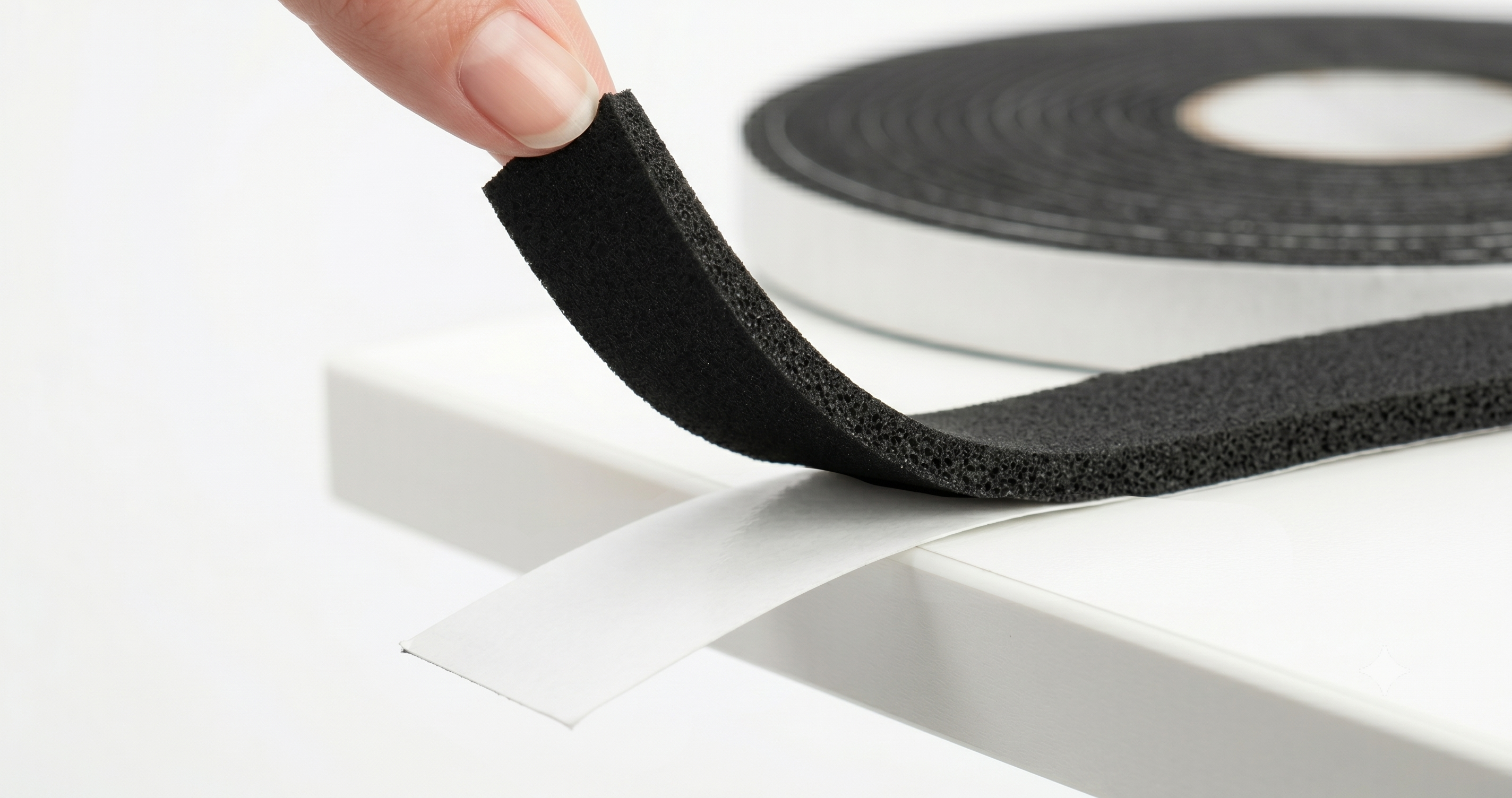
What Foam Tape Actually Does and Why the Type You Choose Matters
Foam tape is one of the most versatile products we sell because it solves a wide range of sealing, mounting, cushioning, and vibration-control challenges across multiple industries. Facilities managers, HVAC contractors, manufacturers, warehouse operators, and maintenance teams use foam tape every day to improve equipment performance, protect surfaces, and create reliable seals against air, dust, and moisture.
The challenge is that not all foam tapes are designed for the same application. Choosing between PVC foam tape, single sided foam tape, and double sided foam tape depends on the environment, surface, and performance requirements of the job.
Learn the common foam tape uses, different types of industrial foam tape, and why our 16SLD foam tape is a popular choice for sealing and cushioning projects.
Foam Tape Types and Applications
Foam tapes serve many purposes beyond simply sticking two surfaces together. Depending on the material, density, adhesive system, and construction, it can seal gaps, reduce vibration, cushion components, dampen noise, and create reliable mounting solutions. Different types of industrial foam tape are designed to perform in different environments and applications.
Understanding the differences between PVC foam tape, single sided foam tape, and double sided foam tape can help you choose the right product for the job. Each option offers unique advantages depending on whether your primary goal is sealing, mounting, insulation, or surface protection.
PVC Foam Tape
PVC foam tape is one of the most commonly used foam tape materials in industrial and commercial environments. Its closed-cell construction helps resist moisture, dust, and air infiltration while providing cushioning and gap-filling performance. PVC foam also conforms well to uneven surfaces, making it useful in applications where a reliable seal is necessary.
Many facilities managers, manufacturers, and contractors use PVC foam tape for gasketing, weather sealing, vibration dampening, and equipment protection. It is commonly found in HVAC systems, equipment enclosures, metal fabrication, glazing applications, and general industrial maintenance. When an application requires a conformable seal to block air, dust, and moisture, PVC foam tape often provides a dependable solution across a wide range of operating conditions.
Single Sided Foam Tape
Single sided foam tape combines a foam backing with adhesive on one side, making it a practical solution for sealing, cushioning, insulating, and protecting surfaces. Rather than bonding two materials together, it is often used to create a barrier against air, moisture, dust, vibration, or noise.
Many industrial and commercial applications rely on single sided foam tape to fill gaps, create compression seals, and protect equipment from wear. Facilities managers and maintenance teams frequently use it around doors, panels, enclosures, HVAC components, and equipment housings where a flexible, conformable seal is needed.
Because it compresses while maintaining its sealing properties, single sided foam tape works well on irregular surfaces where traditional rigid materials may not provide consistent performance.
Double Sided Foam Tape
Double sided foam tape features adhesive on both sides of a foam carrier, allowing it to bond two surfaces while also providing cushioning and gap-filling benefits. This combination makes it a popular alternative to mechanical fasteners in many industrial, manufacturing, and commercial applications.
Many companies use it for mounting signs, displays, panels, trim pieces, and lightweight components. The foam core helps compensate for minor surface irregularities and distribute stress more evenly across the bond area.
In addition to simplifying installation, double sided foam tape can reduce vibration, minimize noise, and create a cleaner finished appearance by eliminating the need for screws, rivets, or other visible fastening methods. When two surfaces need to be bonded while also accommodating movement, vibration, or minor surface irregularities, double sided foam tape can provide advantages that rigid fastening methods cannot.
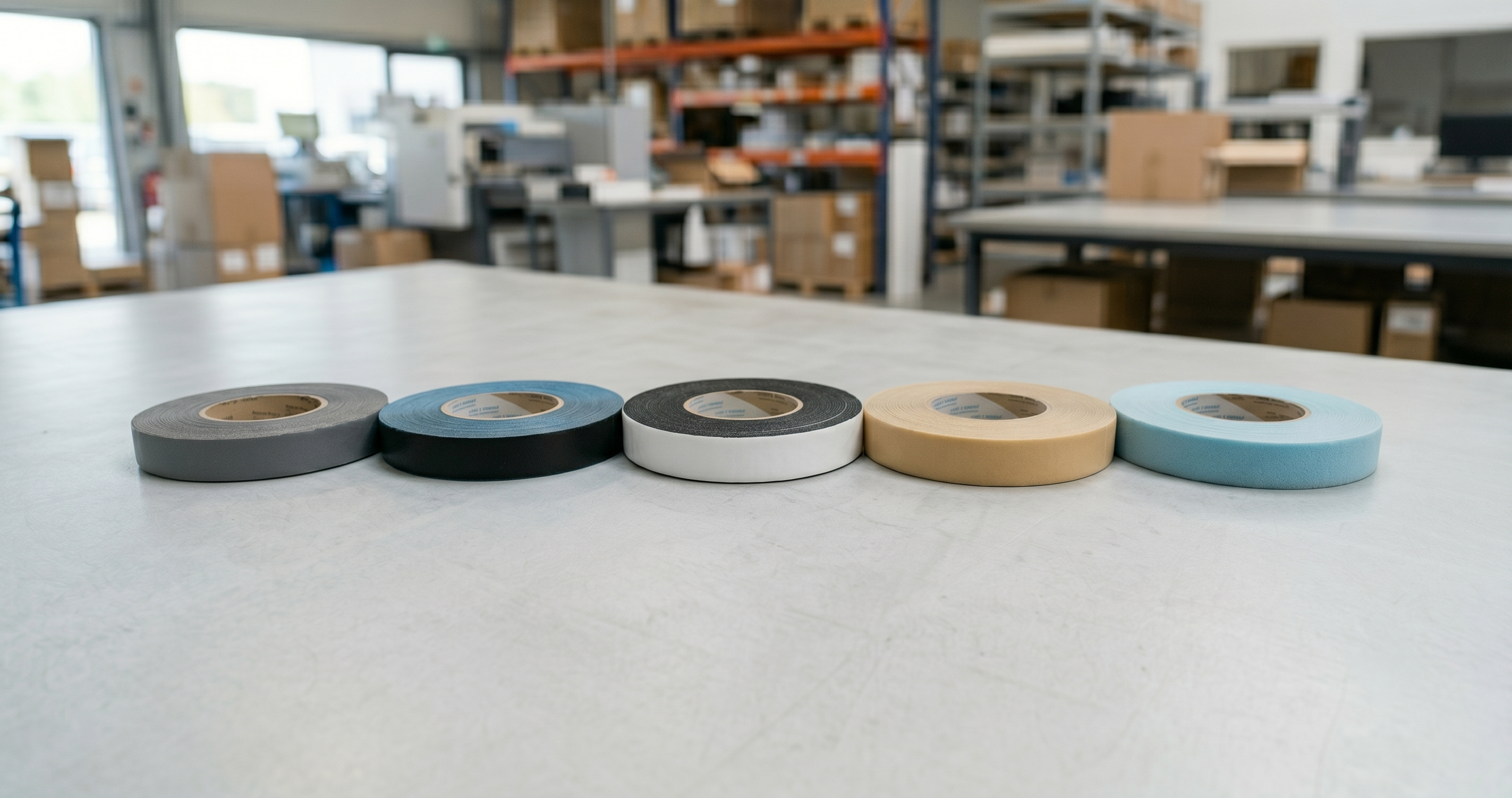
Foam Tape for Sealing and Mounting
Many industrial applications rely on foam tape for more than adhesion alone. The compressibility of foam allows it to fill gaps, conform to irregular surfaces, and absorb movement that rigid materials cannot accommodate. As a result, foam tape is requisite for both sealing and mounting applications across manufacturing, maintenance, construction, and equipment assembly.
From preventing air and moisture infiltration to securing components without mechanical fasteners, the right foam tape can improve efficiency, simplify installation, and support long-term performance.
Foam Tape for Sealing
One of the most common foam tape uses is creating reliable seals against air, dust, moisture, and vibration. Because foam compresses when installed, it can help fill gaps and accommodate surface irregularities that may prevent other sealing materials from performing effectively.
Many organizations use foam tape for sealing doors, access panels, equipment enclosures, HVAC components, windows, and metal assemblies. Facilities managers, manufacturers, HVAC contractors, and maintenance teams often rely on foam tape to help improve energy efficiency, protect equipment, and reduce the effects of environmental exposure. The ability to create a consistent compression seal makes foam tape a valuable solution in a wide range of industrial applications.
Foam Tape for Mounting
Foam tape is also widely used as a mounting solution when components need to be attached securely without screws, rivets, or other mechanical fasteners. The foam core helps distribute stress across the bond area while compensating for minor surface irregularities.
Many companies use foam tape for mounting signs, displays, trim pieces, nameplates, panels, and lightweight equipment components. In addition to simplifying installation, foam tape can reduce vibration, minimize noise, and create a cleaner finished appearance by eliminating visible hardware.
For many applications, mounting with foam tape can reduce installation time while still providing reliable performance and a professional result.
HVAC Foam Tape: Enhancing Efficiency in HVAC Systems
HVAC systems depend on effective sealing to maintain airflow, improve energy efficiency, and reduce unnecessary strain on equipment. Even small gaps around ductwork, access panels, and equipment enclosures can contribute to air leakage and reduced system performance.
Many contractors rely on HVAC foam tape to create compression seals that help block air, dust, moisture, and vibration. Foam tape also helps cushion metal-to-metal contact points, reducing rattles and noise in certain applications.
Because foam tape conforms to uneven surfaces, it can help create more consistent seals than rigid materials in many HVAC environments. Whether used during installation or maintenance, HVAC foam tape helps improve sealing performance and reduce unwanted air leakage.
Featured Product: 16SLD Foam Tape
When sealing performance, flexibility, and ease of installation are priorities, our 16SLD Foam Tape offers a versatile solution for a wide range of industrial and commercial applications. This low-density single sided PVC foam tape features a closed-cell construction and acrylic adhesive system designed to help create reliable seals against air, dust, and moisture.
Facilities managers, HVAC contractors, manufacturers, and maintenance teams use 16SLD for equipment enclosures, access panels, gasketing, vibration dampening, and general sealing projects. Its conformability allows it to adapt to irregular surfaces while maintaining consistent contact across the application area.
Key benefits of 16SLD foam tape include:
- Closed-cell PVC foam construction for sealing and cushioning
- Acrylic adhesive designed for long-term performance
- Conforms to uneven and irregular surfaces
- Helps reduce vibration and noise
- Suitable for indoor and outdoor applications
- Commonly used in HVAC, industrial, maintenance, and equipment sealing applications
For customers seeking a dependable foam tape for a variety of sealing and cushioning needs, 16SLD remains one of our most versatile solutions.
Choosing the Right Foam Tape for the Job
Explore Tape Jungle's full selection of foam tape products or contact our tape experts if you'd like help identifying the right solution for your application.