

 Canadian Dollar

High‑Temp Tape: When Flatback Beats Crepe, Choosing between Polymide and Glass Cloth
Whether you're welding or prepping a surface for a long paint bake cycle, the "one-size-fits-all" masking tape you grabbed off the shelf won't cut it when temperatures climb above 300°F. In those conditions, standard tapes result in paint bleed, hard-to-remove residue, and expensive rework.
A single masking failure triggers costly downtime. In high-stakes industries like aerospace, those hidden costs add up fast. That's why choosing the right high-temperature masking tape matters more than you might realize.
For these high-temperature applications, you have a choice of three contenders, each engineered for specific performance demands. Crepe paper tape is the entry-level choice in this category. Flatback paper tapes are smoother and stronger. Polyimide or Kapton films offer unrivalled heat performance.
When is a flatback the better option over crepe? At what temperatures will polyimide survive without leaving a trace? Explore Tape Jungle's complete high-temperature masking lineup and find the perfect tape for your toughest jobs.
The Science of Heat and Adhesives
At 300°F, tape adhesive performance depends on temperature, dwell time (how long the tape stays hot), and the substrate material. Higher heat accelerates adhesive flow and increases the risk of residue. Longer exposure to the heat magnifies these effects, while porous or oily surfaces make a clean removal harder.
The traditional rubber or resin on crepe and flatback tape delivers aggressive tack and good initial adhesion up to about 325°F. If you want to go above that threshold, such as during extended bake cycles, these tapes can degrade and transfer residue or "bake on." On the other hand, polyimide silicone adhesive tape remains stable up to 500°F+.
High-temperature curing causes rubber-based adhesives to outgas volatile compounds that can contaminate optics, vacuum chambers, or sensitive electronics. Prolonged or repeated bake cycles accelerate the residue transfer and adhesive breakdown.
If you want a low-VOC, clean-removal masking tape, silicone adhesives outgas minimally and generally remain stable. This helps ensure residue-free removal, even after multiple 500°F+ cycles. That makes silicone-based polyimide tape the best application in clean-room, aerospace, and semiconductor processes.
Temperature Range vs. Recommended Adhesive Type
| Maximum Temperature | Dwell Time Tolerance | Recommended Adhesive | Typical Tape Types |
|---|---|---|---|
| Up to 200°F | Long cycles | Rubber/Resin | Crepe, general flatback |
| 200–325°F | Moderate cycles | Enhanced Rubber/Resin | High-temp flatback |
| 325–400°F | Short to moderate | Clean Rubber or Silicon | Specialty flatback or entry-level polyimide |
| 400–550°F+ | Any duration | Silicone | Polyimide, Glass Cloth |
The Everyday Workhorse: Crepe Masking
Crepe paper high-temperature masking tape has been the go-to choice for painters for its consistent performance, especially in moderately high temperatures. Most standard crepe tapes reliably handle up to about 225°F for 30 minutes. Crepe paper is perfect for typical automotive refinish bake cycles that typically hit 180–200°F, short bake cycles, and light-duty powder coating masking tape jobs that cure below 225°F.
Crepe has several advantages:
- Conformability around curves and irregular surfaces
- Lowest cost per roll of any masking option
- Fast lay-down with no knife required
Sustained heat above 225°F can soften the rubber/resin adhesive and lead to edge bleed, residue on removal, or lifting along the tape line.
Shop Tape Jungle's General Purpose Masking Crepe tape and High-Temp Crepe Masking tape for extended bake cycles.
The Upgrade: Flatback for Precision and Endurance
Behind the simple look of flatback paper tape is a high-tensile-strength paper backing that does not shrink or curl even after long, hot cycles. In the flatback tape vs. crepe tape debate, flatback tapes stay dead-flat in sustained temperatures up to 300°F, sometimes higher with premium grades, long after crepe tape fails once heat climbs past 225°F.
Unsurprisingly, that makes flatback the go-to solution when you need reliable performance, razor-sharp paint lines on flat panels, or straight mask-off on metal finishing lines during extended automotive or industrial bake cycles of 60-120 minutes at 250-280°F. Flatback tape also excels in composite curing and any process where masking dies are pressed against the surface under vacuum or pressure.
The major advantages of flatback tapes include:
- Virtually zero edge lift or adhesive bleed
- Ultra-smooth release for laser-straight paint edges
- Excellent resistance to moisture, solvents, and bleed-through
- Easy straight-line tearing
Explore the full flatback tape collection at Tape Jungle.
Extreme Performance: Polyimide in the 500°F Club
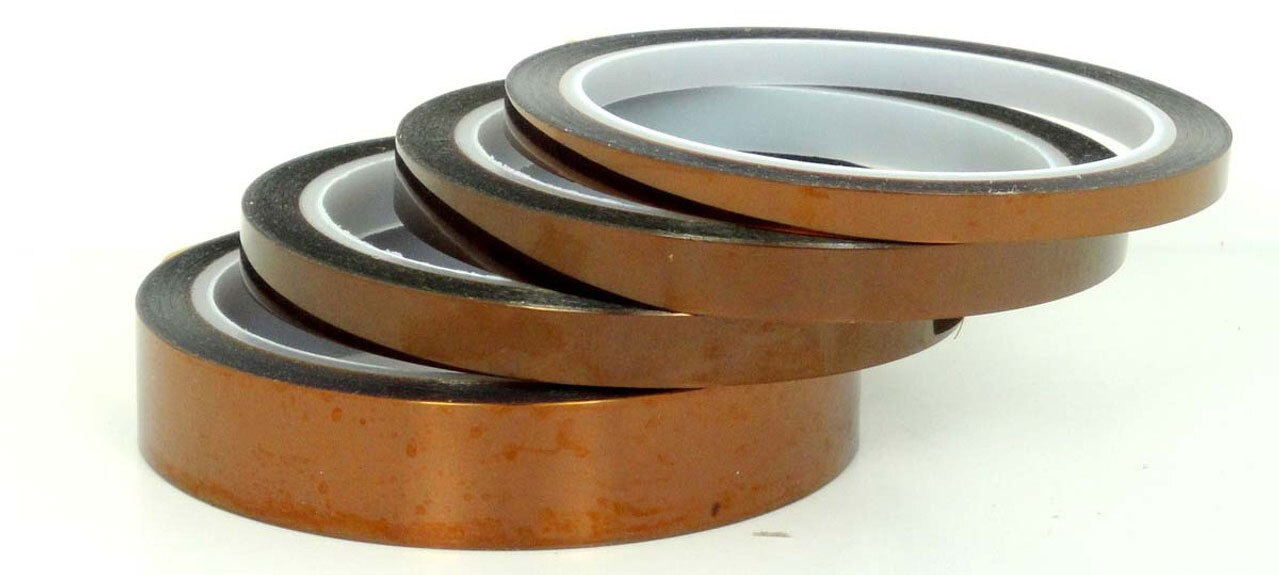
When your process pushes past 400°F, paper tapes reach their chemical breaking point. That's where polyimide film, or Kapton®, takes over. This polymer film was engineered for continuous performance at 500°F and for short exposure up to 600°F without shrinking, charring, or losing integrity. This makes polyimide masking tape an oven-safe tape.
If you pair this with a clean-room-grade silicone adhesive, polyimide leaves zero residue even after hours at peak temperature. It's the perfect tool in situations like anodizing. The silicone system also delivers outstanding dielectric strength of up to 8,000 volts and near-total resistance to aggressive solvents and plating chemistries.
Kapton will work great in these applications:
Specialty Solution: Glass Cloth Thermal Spray Masking Tape
For the most demanding high-temperature environments, glass cloth masking tape fills the gap between traditional paper-based tapes and polyimide film. Tape Jungle’s Glass Cloth Thermal Spray Masking Tape (80907) uses a woven fiberglass backing paired with a high-temperature silicone adhesive, giving it exceptional stability under prolonged heat, abrasion, and direct spray impact.
Unlike crepe or flatback tapes, the fiberglass structure resists shrinkage, tearing, and breakdown when exposed to thermal spray, plasma spray, grit blasting, or repeated 500°F oven cycles. The silicone adhesive system maintains clean removal, even after extended exposure to heat and aggressive surface treatments. This makes glass cloth tape the preferred choice for heavy-duty aerospace processing, industrial coating lines, furnace insulation, and any application where extreme heat and mechanical stress occur together.
Glass cloth tape also provides excellent resistance to chemicals, solvents, and molten overspray, giving it an advantage in coating booths, plating operations, and high-energy manufacturing environments where other tapes fail quickly. When your process demands both high heat tolerance and abrasion resistance, glass cloth masking tape offers a level of durability no paper-backed tape can match.
Shop Tape Jungle's Glass Cloth Thermal Spray Masking Tape 80907 to get industrial-grade performance built for the harshest masking challenges.
- Any process combining extreme heat and harsh chemicals
- High-temp powder coating and e-coat lines
- Wave soldering and reflow masking in electronics
- Aerospace composite layups under autoclave cure
Shop the complete polyimide/Kapton alternative tape product family to find the right tape for your needs.
Choosing the Right High-Temperature Masking Tape: Quick Comparison Chart
| Tape Type | Max Temp | Adhesive | Flexibility | Residue Risk | Best For |
|---|---|---|---|---|---|
| Crepe | 225°F | Rubber | High | Moderate | Short bake, general masking |
| Flatback | 300°F | Rubber | Medium | Low | Long bake, precise lines |
| Polyimide | 500°F | Silicone | Low | Minimal | Electronics, powder coat |
| Glass Cloth (Thermal Spray) | 500°F | Silicone | Low–Medium | Minimal | Thermal spray, plasma spray, high-heat + abrasive processes |
Pro Tips for Better Results
If you want the perfect results from your masking tape with every application, consider these tips:
- Always clean the surface before applying the tape. Dust or oil films will turn into adhesion weak spots as the high temperature expands the adhesive. Wipe with approved prep solvent, and let it flash off completely.
- Apply the adhesive at room temperature. Cold surfaces cause shrinkage gaps, while hot surfaces make the adhesive tack or grab. Mask at 65-80 °F, press firmly with a squeegee or roller, and allow 5-15 minutes to dwell so the adhesive fully wets out before the oven ramp.
- Remove the adhesive when the surface is warm, not hot. If you peel it off at full bake temperature, the tape can tear or leave a residue. Waiting until it is cold lets the adhesive re-solidify and bond harder.
- Store the adhesive rolls lying flat in their original sleeves, in a cool, dark place. UV rays and heat slowly pre-cure rubber adhesives and turn fresh tape into residue.
Find the Right Masking Tape for High Temperatures
Finding the right high-temperature masking tape suited to each application ensures your project goes smoothly. With the right knowledge, you can select the right tape suited to the job's needs in terms of heat, dwell time, and substrate. That way, you'll end up with razor-sharp lines and zero residue, minimizing bleed-through, rework, and returns.
If you need the everyday reliability of crepe, the precision of flatback, or the unrivaled performance of polyimide, Tape Jungle has every grade ready to ship today. Browse the full flatback collection and explore the polyimide/Kapton tape collections.
Are you still not sure which tape will survive your process? Request a quote, or contact us for sample rolls and real-world application testing for your next high-heat masking solutions.